
Forget the complex legal jargon and tech-bro buzzwords for a second. There is a new manual for the future of Artificial Intelligence, and it was written in New Delhi.
Earlier this February, the AI Impact Summit 2026 concluded with 89 countries, including giants like the US and China-signing the New Delhi Declaration. It’s being called the Magna Carta of AI, and for a good reason. It shifts the focus from just surviving AI to actually making it work for everyone.
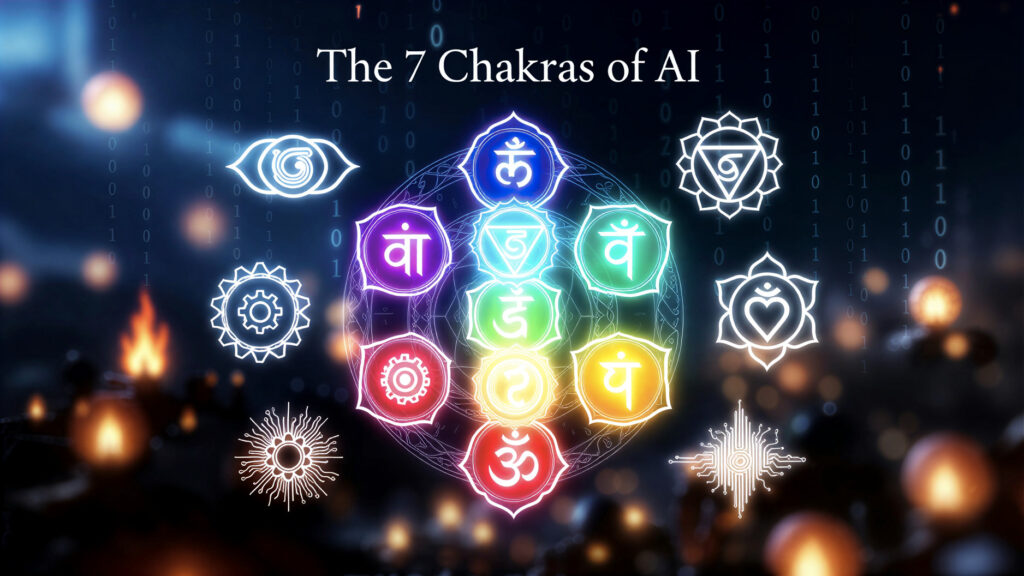
Here is the breakdown of the Seven Chakras that are about to redraw the global tech map.
Read Also: Why we trust AI more than Human intuition in 2026
The Seven Chakras of AI
The Declaration isn’t just a fancy letter; it’s structured around seven actionable pillars (the Chakras) designed to balance innovation with safety.
Human Capital (The Root)
This is all about the workforce. The world is terrified of AI taking jobs, so this Chakra focuses on a Global AI Workforce Playbook. It’s less about fighting the machines and more about reskilling people so they can actually use them.
Inclusion for Social Empowerment
AI shouldn’t just speak English. This pillar pushes for multilingual models (like India’s Bhashini) to ensure that someone in a remote village has the same access to AI as someone in Silicon Valley.
Safe and Trusted AI
Think of this as the Glass Box approach. Prime Minister Modi famously argued against Black Box AI where nobody knows how decisions are made. This Chakra demands transparency and sets up things like the IndiaAI Safety Institute.
Read Also: Can AI Agents Be Trusted in 2026? Safety Measures You Must Know
Resilience, Innovation, and Efficiency
This is the Green Chakra. It focuses on energy-efficient AI. Since training a single large model can consume as much energy as five cars over their lifetime, the focus here is on Green AI and sustainable infrastructure.
AI for Science
This Chakra connects global research labs to use AI for the big stuff: curing diseases, predicting climate disasters, and discovering new materials. It’s about moving AI from chatbots to lab partners.
Democratizing AI Resources
Currently, a few big companies own all the Compute (the chips and power). This pillar aims to create a Global Compute Bank, making AI resources affordable for startups and developing nations.
AI for Economic Growth and Social Good
The final Chakra focuses on the “real world.” It’s about deploying AI in healthcare, agriculture (like the Kisan e-Mitra chatbot for farmers), and education to boost the GDP of the Global South.
For the longest time, the rules of AI were written in the West, focusing mostly on existential risks (the Terminator scenarios). The New Delhi Declaration changes the narrative. It says, Yes, safety is important, but so is access.
By signing this, 89 nations have agreed to a voluntary, non-binding framework that prioritizes Democratic Diffusion. In simple words: AI shouldn’t be a luxury for the rich; it should be a utility for the world.
Fun Fact: India’s AI hiring rate is currently at 33%, the highest in the world according to the Stanford AI Index 2025. We aren’t just hosting the party; we’re leading the dance.