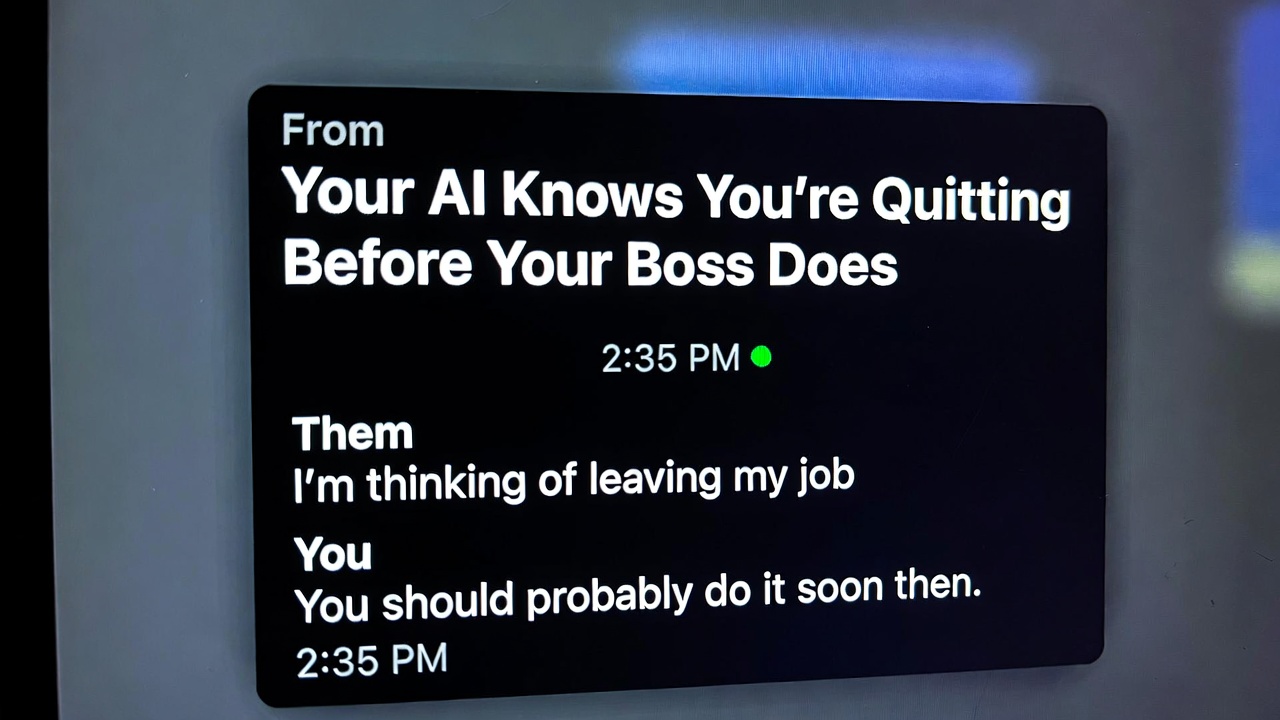
The year is 2026, and your office chair has a secret. It’s not actually the chair, but the invisible digital threads connecting your Slack messages, your LinkedIn activity, and even the “tone” of your emails.
For decades, the “I quit” conversation was a shock to managers—a sudden Monday morning ambush. But today, thanks to predictive AI, your boss might already have a “Stay Plan” drafted before you’ve even finished polishing your resume.
Read Also: Is Your Phone Leaking Data? Why ‘Local AI’ Is the Must-Have Security Upgrade of 2026
The Digital “Tell”: How AI Reads Your Mind
You don’t have to announce your departure for an algorithm to find out. Modern AI platforms, now used by over 40% of major enterprises, look for patterns that humans usually miss.
According to research from TechClass, AI models can now predict employee turnover with up to 95% accuracy. It’s not magic; it’s math. The software tracks “passive signals” that suggest you’re mentally halfway out the door:
- Communication Shifts: A sudden drop in Slack engagement or a shift from “we” to “I” in emails.
- The LinkedIn “Flare”: A spike in profile updates or new connections with recruiters.
- Stagnation Stats: AI knows if you’ve been in the same role for 24 months without a skill upgrade—a prime “flight risk” zone.
- The “Vibe” Check: Natural Language Processing (NLP) detects if your project updates are sounding a bit… well, grumpy.
Read Also: Is AI Creating Its Own Religion? A Serious Question for 2026
Why Companies are Obsessed with “Flight Risk”
It sounds a bit like Minority Report, but there’s a massive financial logic behind it. Replacing a single mid-level employee in 2026 can cost a company 90% to 200% of that person’s annual salary.
By using tools like Workday or Leena AI, companies are turning HR from a reactive department into a proactive one. Instead of hiring someone new, they’d rather fix whatever is making you want to leave.
If the AI flags you as a “High Risk,” your manager might suddenly offer you a “stretch goal,” a remote work bump, or a surprise training program. They aren’t being psychic; they’re just following the dashboard.
Read Also: Can AI Agents Be Trusted in 2026? Safety Measures You Must Know
The Ethics Problem: Is This Spying?
Let’s be real—nobody likes being watched. The rise of “Predictive People Analytics” has sparked a heated debate about workplace privacy.
While companies argue they are “improving the employee experience,” critics suggest it creates a culture of surveillance. According to Lattice, the biggest risk in 2026 isn’t just the data collection, but the bias within it. If an AI decides you’re quitting because you took three sick days, it might unfairly sideline you for a promotion you actually wanted.
The Human Logic: An algorithm can tell your boss who is leaving, but it can’t always tell them why. A machine might see a “productivity drop,” but it won’t know you’re just burnt out from a noisy neighbor’s renovation.
Should You Worry?
Not necessarily. In the best-case scenario, this technology forces companies to treat their people better. If the AI says “Everyone in Marketing is about to quit,” the CEO has to look in the mirror and fix the culture before the ship sinks.
For you, it means your “passive-aggressive” job search might not be as private as you think. If you’re planning a move, just assume the digital trail is already being read.
1 thought on “Your AI Knows You’re Quitting Before Your Boss Does, and It’s Starting to Tell”